
Blog Posts
My Oil & Gas Story: From Skeptic to Industry Insider
These are only a few things I’ve heard about the natural resource industry amongst my peers over the last couple years.


A Google search for “the Strait of Hormuz” returns 163 million search results, with 25.8 million of those results created in the last month alone.
If you hadn’t heard of it before, you’ve definitely heard the name now. The Strait of Hormuz has been the main character in countless news stories in the last few weeks. But what is it? Why is it in the news? More importantly, why should we care?
Situated between Iran to the north and Oman and the United Arab Emirates to the south, the Strait of Hormuz is 50 km wide at its entrance and exit and a mere 33km wide at its narrowest point. It is the only maritime connection between the Persian Gulf and the rest of the world.
The Gulf is one of the most important oil and gas export hubs in the world. Iran, Iraq, Qatar, Kuwait, Saudia Arabia, and the UAE (some of the biggest energy producing countries in the world) all export energy via ships from the Gulf, meaning the Strait of Hormuz sees a lot of action.
Approximately 20 million barrels of oil and 9.3 billion cubic feet of gas go through the Strait of Hormuz every single day.
It’s hard to overstate how important the Strait of Hormuz is to the global oil and gas trade. Around 20% of the world’s oil and gas is produced and exported from the Gulf, and 80% of this energy is shipped within Asia. Along with key Asian markets, European importers rely on Qatari LNG imports as well.
The Strait of Hormuz being nicknamed “the world’s most important oil artery” seems fitting.
You’ve probably heard by now about the ongoing war in Iran that began at the end of February 2026. Even if you didn’t know about the war, you’ve undoubtedly noticed a major hike in gas prices.
To simplify a very complicated and evolving conflict, the US and Israel attacked Iran on February 28th, 2026, which led to retaliatory strikes in Israel, Lebanon, Qatar, Saudi Arabia, and other Arab countries. Casualties are in the thousands and millions of people have been displaced, with no clear end to the war in sight at this point.
One component of Iran’s retaliation in the conflict has been its effective closing of the Strait of Hormuz. Iran’s Revolutionary Guard Corps has issued a ban on any ship passing through the Strait without the explicit permission of the Iranian government.
As you might imagine, this has completely halted all oil and gas tanker traffic through the Strait of Hormuz, thereby closing the Gulf off from the rest of the world. Given the massive global importance of energy produced in the Middle East, this abrupt closure is causing a near unprecedented energy crisis.
Oil prices have skyrocketed. Huge percentages of some countries’ oil and natural gas imports have stopped, leading to shortage fears in places like Pakistan, India, Japan, and South Korea. Globally, the energy sector is facing major uncertainty, which isn’t a good thing.
Further, other important commodities that usually travel through the Strait of Hormuz (like fertilizer and food) can’t pass through.
Things are bad. What’s more, there’s little indication they’re getting better anytime soon.
The most clear-cut reason I could give you to care about what’s going on with the Strait of Hormuz and the global energy sector is that gas prices north of $2.00 aren’t cool, especially with the cost of living being what it is. But that’s a given.
Beyond gas prices, this energy crisis will have widespread impacts on more areas of your life than you’d think. Summer vacation plans? Think about the bump in flight prices due to higher jet fuel costs for airlines. Groceries too – higher costs to fertilize and transport food are passed onto us as the consumers.
Further, think about all the products we use each day that’re made from petroleum products. Plastics. Synthetic fabrics. Cleaning supplies. The list goes on.
But most of all, you should care about the Strait of Hormuz closure because it reminds us just how lucky we are as Canadians.
Canada has some of the largest and richest oil and gas reserves in the world. We have ocean access on both sides of the country, opening us up to trade with energy-hungry Asian and European markets. We have serious investors wanting to build projects across the country that will strengthen our economy, provide high-paying jobs, and help Canada become an energy superpower.
We have so much potential, even if it takes an energy crisis to remind us. Why not get projects built and share our energy with the world before the next crisis comes along?
This has been the first entry in the new YCR Explainer Series. This ongoing series of short, informative blogs allows YCR contributors to write about topics they think are cool and want to share with other young Canadians. Subscribe to our newsletter to stay up to date on new blogs and contact us if you’re interested in contributing one of your own!
Sign up for updates about our work at YCR. Please sign up using a personal email and not a work or school email if possible.
"*" indicates required fields
These are only a few things I’ve heard about the natural resource industry amongst my peers over the last couple years.

As I am here in Alberta for the summer I am going to explore the types of jobs open to me on an oil rig as an inexperienced worker.
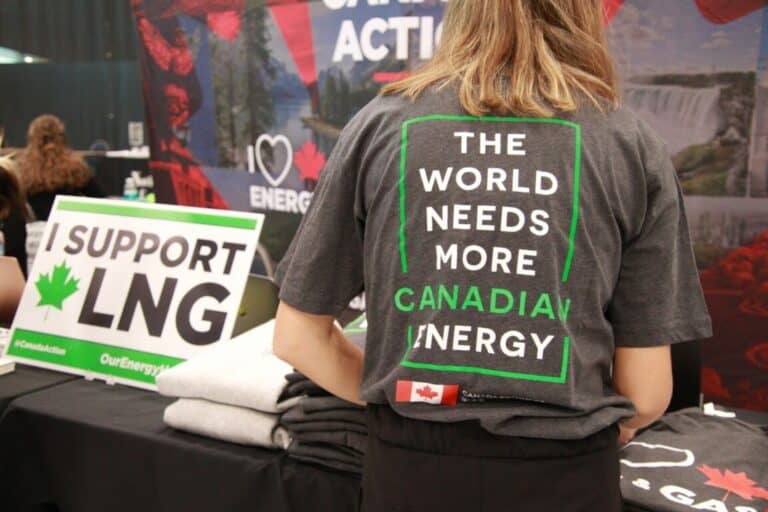
The Montney Formation can satisfy this demand with some of the world’s most sustainably produced and exported natural gas and LNG, while at the same time yielding jobs and prosperity